
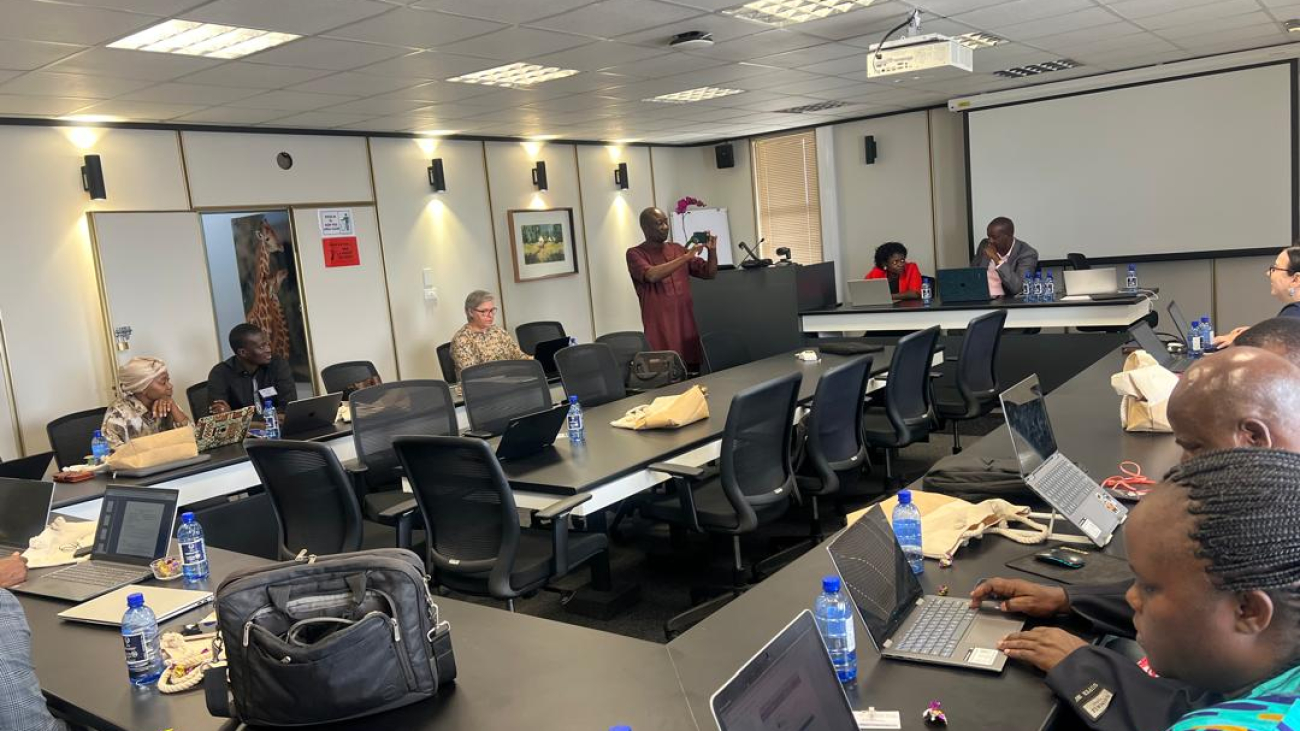
The Intra-Africa Academic Mobility Scheme (MAINSTREAM Project), Phase II, coordinated by Mountains of the Moon University, is pleased to announce the successful selection of scholarship beneficiaries for the December 2025 intake. The selection process was conducted at the University of the Free State (UFS), South Africa.
Following a rigorous evaluation process conducted by the Local Selection Committees and the Project Steering Committee, candidates were selected based on academic merit, relevance of proposed study or research, institutional balance, and the availability of project funding. The selected beneficiaries will undertake mobility for Masters, PhD, and Internship programs across participating African universities.
Below is the consolidated list of successful applicants, presented by host institution and category of mobility.
- Mountains of the Moon University
Masters Selected candidates
| No | Name | Gender | Type of Mobility | University of Origin |
| 1 | Bere Abiré | F | Masters Research | University Of Kara |
| 2 | Tesfay Hailekiros Assefa | M | Masters Research | Pan African University Institute For Water And Energy Sciences |
| 3 | Julienne Nikuze | F | Masters Research | Lilongwe University Of Agriculture And Natural Resources |
| 4 | Atieno Beatrice | F | Masters Research | Jooust |
| 5 | Ebenezer Manso | M | Masters Research | University Of Cape Coast, Ghana |
| 6 | Jean Bosco Mbonyumuvunyi | M | Masters Research | Lilongwe University Of Agriculture And Natural Resources |
Intership Intership Selected Candidates
| No | Name | Gender | Type of Mobility | University of Origin |
| 1 | Brenda Chepkurui | F | Internship | Jooust |
| 2. | El Hadji Ndiaga Diop | M | Internship | USSEIN |
PhD Scholars Selected
| No | Name | Gender | Type of Mobility | University of Origin |
| 1 | Beshir Shaku Beriso | M | PhD | Haramaya University (Afilliated To Arsi University) |
| 2 | Ntikazohera Marius | M | PhD r | University Of Burundi |
- Arsi University
Phase 2 Masters Selected candidates
| No | Name | Gender | Type of Mobility | University of Origin |
| 1 | Asiimwe Mary Gorrette | F | Research (MSc) | Eduardo H (Other) |
| 2 | Bolaji Olaniyi | M | Research (MSc) | African Business School (Morocco) |
| 3 | Risper Awuor Ochieng | F | Masters Research( MSc) | JOOUST ( Kenya) |
| 4 | Abu Bakarr Sesay | M | Research (MSc) | Nyala (Sierra Leone) |
Intership Selected Candidates
| No | Name | Gender | Type of Mobility | University of Origin |
| 1 | Flavia Tracy Nakanwagi | F | Internship (BSc) | MMU |
| 2 | Ninsiima Nobert | M | Internship (BSc) | MMU |
| 3 | Mohamed KA | M | Internship (BSc) | USSEIN |
PhD Research Scholar Selected
| No | Name | Gender | Type of Mobility | University of Origin |
| 1 | Okwera Simon | Male | Research (PhD) | Gulu (Uganda |
- JOOUST
Masters Selected candidates
| No | Name | Gender | Type of Mobility | University of Origin | |
| 1. | Chabi Rachad | M | Research | University de Kara | |
| 2. | Achabo Dorothy | F | Research | Gulu University | |
| 3 | Angelique Manishimwe | F | Research | Lilongwe University Of Agriculture And Natural Resources |
Intership Selected Candidates
| No | Name | Type of Mobility | University of Origin | ||
| 1. | Ba Thierno | Internship | USSEIN- Informed | ||
| 2. | Muzaki Priscilla | Internship | Mountains of the Moon- Informed | ||
PhD Scholars Selected
| No | Name | Type of Mobility | University of Origin |
| 1. | Kabaseke Clovis | Research | Uganda Martyrs University |
- USSEIN
Masters Selected candidates
| No | Name | Type of Mobility | University of Origin | ||
| 1 | KPAMNONA Ditoriguima | Research | Universite De Kara (UK, Togo) | ||
| 2 | ADAMOU BIZO Ismael | Research | Université Abdou Moumouni,Niger | ||
| 3 | MAGLO KUAM KAKA DJONI | Research | University DE LOME- TOGO | ||
PhD selected candidates
| No | Name | University of Origin |
| 1 | Meyéme DEMAKOU | University of Kara (UK, Togo) |
Intership Selected Candidates
| No | Name | Type of Mobility | University of Origin | ||||||
| 1 | TCHAGBELE Hicham Essofa | Internship | Universite De Kara (UK, Togo) | ||||||
| 2 | IDRISSOU BIYAO-KOLOU Maroufa | Internship | Universite De Kara (UK, Togo) | ||||||
| 3 | Sassou Mawuko GOUDEAGBE | Internship | Universite De Kara (UK, Togo) | ||||||
| 4 | CODJO Yénoukounmè Martial Maxime | Internship | University nationale d’agriculture,(Benin) | ||||||
| 5 | OKOTAN Balkiss | Internship | Universite De Kara (UK, Togo) | ||||||
- UFS
Phase 2 Masters Selected candidates
| No | Name | Type of Mobility | University of Origin | ||||
| 1 | Agbeko Abra Rita | Maters | University of Kara | ||||
| 2 | Sharone Juma Atieno | Masters | JOOUST | ||||
| 3 | Yobsan Degefa Dadi | PhD | Arsi University | ||||
| 5 | Modock Odiwuor Oketch | Masters | JOOUST | ||||
| 6 | Abonyo Geofrey Okinyi | Masters | JOOUST | ||||
| 7 | Maureen Anyango Oyugi | PhD | JOOUST | ||||
| 8 | Hasen Deksiso Wari | PhD | Arsi University | ||||
| 9 | Nesredin Hajo Weni | Masters | Arbaminch University | ||||
NB. Two current PhDs are requesting to stay for three more months each, (6 months extra for PhD
- UK
Phase 2 Masters Selected candidates
| No | Name | Type of Mobility | University of Origin | |||
| 1 | Kule Nason | Research | (MMU, Uganda) | |||
| 2 | Serigne Fallou NIANG | Research | (USSEIN, Senegal) | |||
| 3 | Marychrista Atieno Onyango | Research | (JOOUST, Kenya) | |||
| 4 | Jacton Okombo Okelo | Research | (JOOUST, Kenya) | |||
| 5 | Dorine Anyango | Research | (JOOUST, Kenya) | |||
| 6 | Nyangoma Annet | Research | (MMU, Uganda) | |||
| 7 | Bire Jemberu Kassie | Research | Bahir Dar University, Ethiopia | |||
| 8 | Desisa Chalchisa Mechalu | Research | Arsi University | |||
Internship Selected Candidates
| No | Name | Gender | Type of Mobility | University of Origin |
| 1 | Mame Fatou KA | F | Internship | (USSEIN, Senegal) |
| 2 | NTEGEKA PATIENCE | F | Internship | (MMU, Uganda) |
| 3 | DÉMBA BALDÉ | M | Internship | (USSEIN, Senegal) |
PhD Scholars Selected (Transferred)
| No | Name | Gender | Type of Mobility | University of Origin |
| 1 | ABDI ETEFA | M | Research | Arsi University, (ASU, Ethiopia) |
| 2 | Emmanuel Randy Mwakidoshi | M | Research | Kenyatta University |